Privacy Is Becoming Something You Have to Wear.
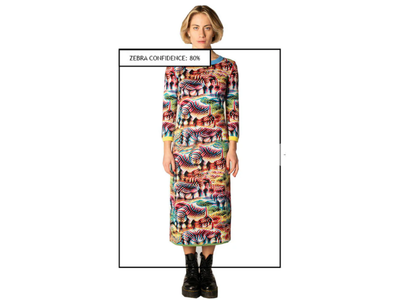
This dress costs $781. It is also spectacularly ugly. Normally, that wouldn’t make it remarkable; the fashion industry has been charging obscene prices for ugly clothes for decades. But this dress isn’t really selling fashion. It’s selling the chance to disappear—not from people, but from machines.
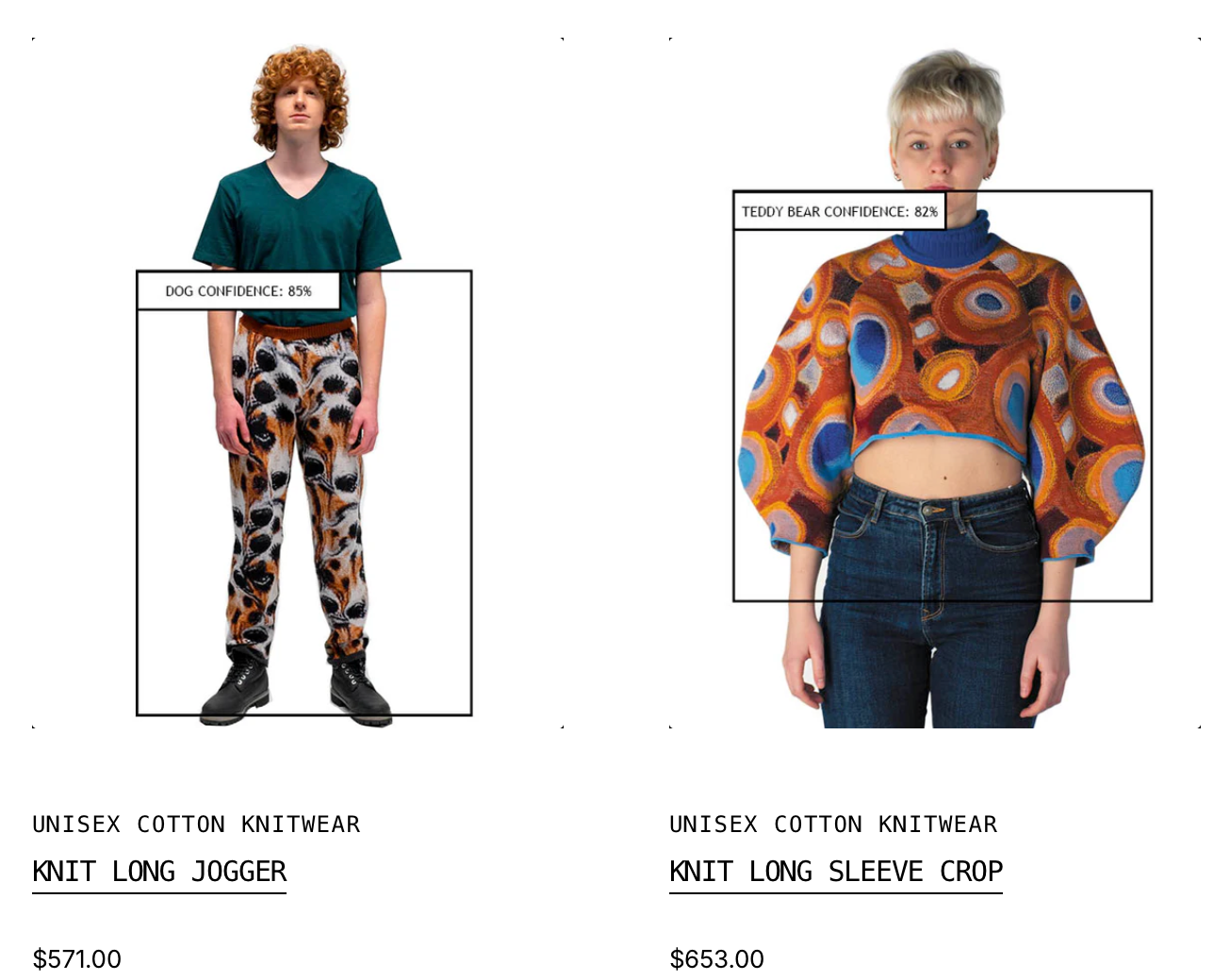
The Italian company Cap_able weaves specially designed patterns into its clothing to confuse the computer-vision systems used by surveillance cameras. When the software scans someone wearing the dress, it may fail to recognize a person at all.
Cap_able isn’t alone. An entire industry is developing around what is known as “adversarial clothing.” Urban Privacy has designed a coat with infrared lights built into the hood to overwhelm certain cameras. Reflectacles sells glasses that block or reflect the infrared light used by some facial-recognition systems.
It is easy to treat all of this as a novelty. People are dressing like scrambled television signals to fool cameras. It is interesting, strange and even a little funny. But the existence of anti-surveillance clothing tells us something much larger.
Privacy used to be the default. It no longer is.
For most people, surveillance once required effort. If the government wanted to know where you went, someone had to follow you. If a store wanted to identify you, an employee had to recognize your face. If investigators wanted to reconstruct your movements, they had to find witnesses, collect recordings and piece together what happened. That friction mattered because it forced someone to decide you were worth watching before the watching began.
AI reverses the order. Modern camera systems can identify faces, follow people across locations and search enormous amounts of footage automatically. They don’t need to begin with a suspect. They can watch everyone first and decide who matters later.
The burden has been reversed as well. Governments and corporations no longer need to work particularly hard to identify us; we have to work to prevent them from doing it. That means buying special clothing, wearing infrared lights or covering the parts of the face an algorithm needs to recognize us. Because the technology keeps changing, today’s defense may not work against tomorrow’s system. Your $781 dress doesn’t go out of fashion. It gets defeated.
That is the problem with fighting software through clothing. It is a badly mismatched contest. One side has enormous camera networks, facial databases, institutional budgets and software that can be updated continuously. The other has an ugly dress and hopes the computer sees a giraffe.
None of this arrives under the banner of eliminating anonymity. Every new surveillance system comes attached to a reasonable purpose. Retailers want to catch shoplifters. Police want to find violent suspects. Airports want to identify dangerous people. Cities want to make public spaces safer. Each camera can be defended when viewed by itself, but together they create something nobody was ever asked to approve: a world in which moving through public life anonymously becomes nearly impossible.
That is how a surveillance state is built—not through one dramatic decision, but through one reasonable camera at a time.
There is an obvious rebuttal: If you are walking through a public place, people can already see you. That is true, but it is also completely beside the point. Being visible is not the same as being identified. They couldn't be more different.
A stranger may see you enter a grocery store, but he probably doesn’t know your name. He doesn’t automatically connect that visit to the restaurant you visited yesterday or the political meeting you attended last month. He doesn’t preserve the encounter indefinitely in a searchable database.
A surveillance network can.
Public life has always required being seen. It did not require being searchable.
These systems are also the technological foundation upon which something worse could eventually be built. A social-credit system doesn’t begin with points or government scores. It begins with the ability to identify people, follow their movements, compile their behavior and connect everything to a permanent record. We don’t have such a system, but the cameras, algorithms and databases it would require are being installed anyway in the name of purposes almost everyone supports.
That is why the dress matters, even if it works imperfectly and looks ridiculous. It is physical evidence that the old balance has been inverted. People now need to dress defensively against machines that can identify them without their knowledge or permission. When citizens need technological camouflage to move through public life anonymously, the real question isn’t whether the clothing works. It is why the clothing became necessary.
Privacy used to be free. Now it costs $781—and there is no guarantee it will still work next season.
Editor’s note: In a fitting postscript, these clothes confused the AI software we use to create thumbnails. After repeated attempts, it couldn’t reliably separate the people from the white background, detect layers, or generate a background with these people in the foreground. An image generator isn’t the same as facial-recognition software, so this proves nothing about the product’s effectiveness. But a dress designed to confuse AI managed to confuse our AI. We thought that was worth mentioning.