We Used to Build Architectural Masterpieces in Nine Months.
In 1930, Los Angeles built one of the most beautiful buildings in America in nine months.
Not a warehouse. Not a strip mall. Not a box with a drive-through window.
The Eastern Columbia Building rises thirteen stories above downtown Los Angeles in turquoise terra cotta and gold trim, crowned by one of the great Art Deco clock towers in the country. It has arches, setbacks, ornament and unmistakable ambition.
It is stunning.
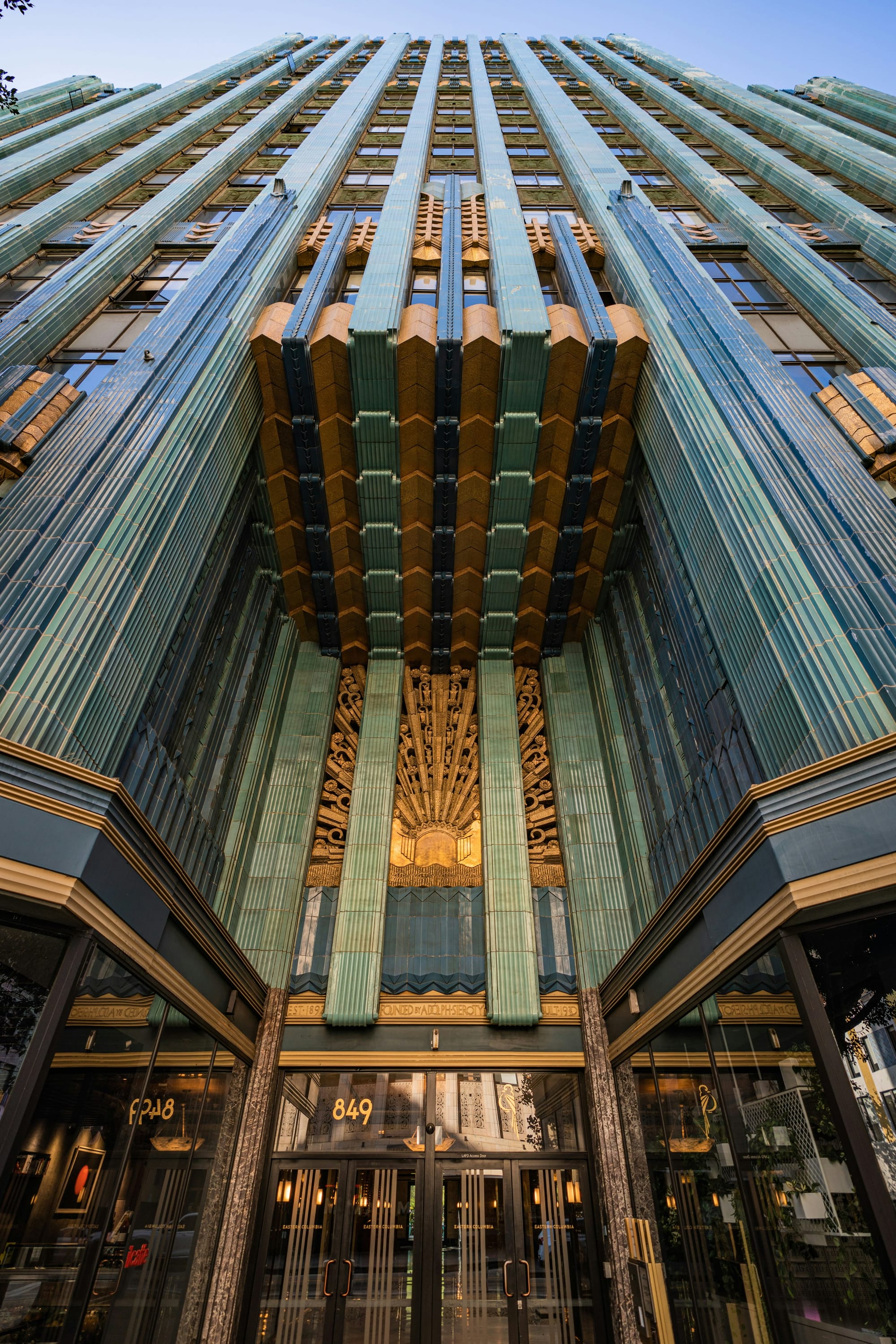
And it was built during the Great Depression, using machinery that would look primitive beside what builders have today.
Nine months.
Spencer Pratt recently pointed this out while responding to an X post listing major buildings and public works that earlier generations completed in periods of time that now seem almost unbelievable.
how long it took America to build things:
— Zane Hengsperger (@zanehengsperger) July 19, 2026
transcontinental railroad: 6 years (1869)
Empire State Building: 410 days (1931)
golden gate bridge: 4 years (1937)
hoover dam: 5 years, finished 2 years early (1936)
the pentagon, largest office building on earth: 16 months (1943)… pic.twitter.com/sVOUg59pzx
Today, building any of those things that quickly would sound impossible.
But why?
Our tools have not become worse.
One person operating the right machine can now perform work that once required ten, twenty or even a hundred men. We have cranes capable of lifting hundreds of tons. We have excavators, concrete pumps, laser measurements, computer-assisted design and prefabricated components manufactured to exact specifications.
Modern machinery can move more earth before lunch than an old construction crew could move in a week.
Nearly every physical limitation that slowed builders a century ago has been reduced, mechanized or eliminated.
And yet building has not become dramatically faster.
If anything, it has become slower.
Much slower.
That should bother us.
Earlier generations did not merely build quickly.
They built masterpieces, and they did it quickly.
They constructed train stations, courthouses, bridges, towers and civic buildings with ornament, craftsmanship and permanence. They built places intended to outlive the people who designed them, financed them and laid the stone.
A beautiful building is a blessing to the generation that builds it and a gift to every generation that follows.
For nearly a century, the Eastern Columbia Building has blessed Los Angeles. Millions of people who had nothing to do with its construction have nevertheless benefited from its existence. Its builders spent nine months creating something the city has been enjoying for almost one hundred years.
People still go out of their way to photograph it.
Few people would bother taking a photograph of most buildings constructed today, much less photograph them a century from now.
We often talk about modern architecture as though Americans simply lost their taste for beauty.
Maybe we did.
Or perhaps we made the process of building so expensive that beauty became a luxury we could no longer afford.
Whatever happened, we somehow arrived at the worst possible outcome:
Ugly buildings that take forever to build.